
astrology
Face Reading (Mukha Samudrika): A Traditional Practice and Its Limits
A cautious introduction to traditional Face Reading, observational context, its relationship with Palmistry, and firm limits on responsible use.
By Naveen Modgill
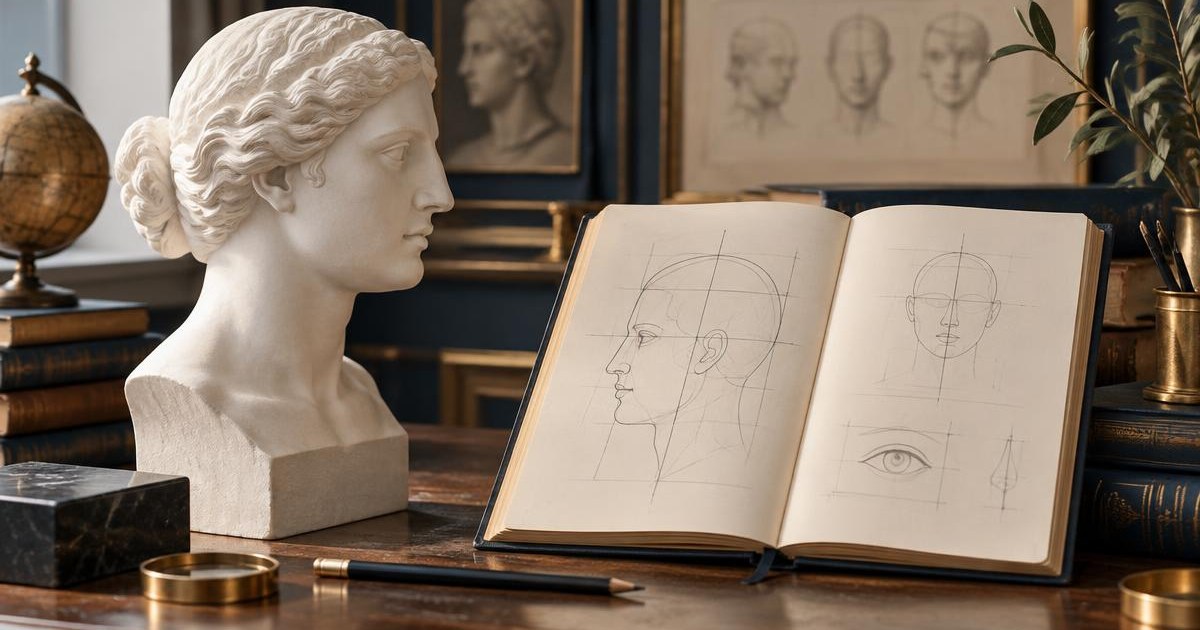
Face Reading, sometimes described as Mukha Samudrika within broader Samudrik traditions, is a traditional observational practice. It is belief-based and interpretative, not a scientifically validated method for determining personality, intelligence, morality, health or future events from appearance.
Responsible discussion must avoid deterministic labels. A face is affected by age, expression, lighting, camera angle, health, culture and many other circumstances. It cannot justify claims about a person's rights, abilities or trustworthiness.
Face Reading within Traditional Study
Traditional Face Reading is associated with broader Samudrik study of visible form and expression. Historical practitioners developed interpretative conventions, but those conventions should be presented as traditions rather than scientific facts.
The practice is best approached as a limited observational discipline within its cultural context. It should not be turned into a diagnostic system or used to make decisions about someone who has not consented to being discussed.
What Traditional Practitioners Observe
At a broad level, traditional study may note overall facial form, proportion, expression, visible changes with age and the context in which an observation is made. A responsible practitioner does not reduce these observations to tables such as “this nose means this personality”, “this forehead proves intelligence” or “this eye shape reveals character”.
No claim should be made about race, ethnicity, religion, caste, criminality, morality, intelligence, mental illness, sexuality, medical diagnosis or trustworthiness from facial appearance. Those claims are unsupported, discriminatory and potentially harmful.
Expression Is Not the Same as Character
A temporary expression may reflect concentration, fatigue, discomfort, lighting or the instant a photograph was taken. It does not prove enduring character. Camera lenses and angles can alter apparent proportion, while age and ordinary life changes affect appearance over time.
For these reasons, a single photograph is especially weak context. Even an in-person observation remains a traditional interpretation, not scientific evidence of personality or intention. The person being observed should not be treated as if an interpretation overrides what they say about their own experience.
Face Reading and Palmistry
Face Reading and Palmistry are sometimes grouped within broader Samudrik traditions, but they examine different material. Palmistry considers the hand through its own traditional framework. Face Reading considers broad facial form and expression. Neither should become a deterministic judgement.
The existing article Palmistry (Hast Rekha): What the Hand Shows and What It Does Not explains how hand analysis is used cautiously and why a short life line, for example, must not be turned into a frightening prediction. This Face Reading guide does not duplicate that discussion.
Those interested in the service can review the Palmistry consultation. Face Reading itself is not offered as a separate paid package on this website.
Face Reading and the Birth Chart
Where a practitioner works with both traditions, Face Reading may be discussed as supplementary observation rather than a replacement for horoscope analysis. A birth chart follows a different traditional system based on birth data, the Lagna, Houses, Grahas and other interpretative layers.
Neither system provides certainty. Combining two belief-based approaches does not transform them into scientific diagnosis or objective proof. Any disagreement between them should encourage caution and further questions, not increasingly forceful claims.
Responsible Limits
Face Reading must not be used for high-stakes decisions about employment, recruitment, credit, insurance, medical treatment, legal matters, education admission, housing or another person's rights. It must not be used to identify criminals, diagnose illness, assess mental health, judge honesty or infer protected personal characteristics.
Photographs should be shared only with permission and handled respectfully. A person should not upload someone else's image for secret judgement. For health, legal, psychological, financial or safeguarding concerns, seek the relevant qualified professional rather than relying on appearance-based interpretation.
Naveen Modgill's Area of Study
The Qualifications, Training & Areas of Study page records a Face Reading seminar undertaken by Naveen Modgill at the Institute of Mystique Sciences. It is described as a seminar, exactly as recorded. It is not presented as a professional licence, government accreditation, medical qualification, scientific certification or regulatory recognition.
This context explains why Face Reading appears in the Knowledge Centre while preserving its proper limits. The article is educational and does not create a paid Face Reading service.